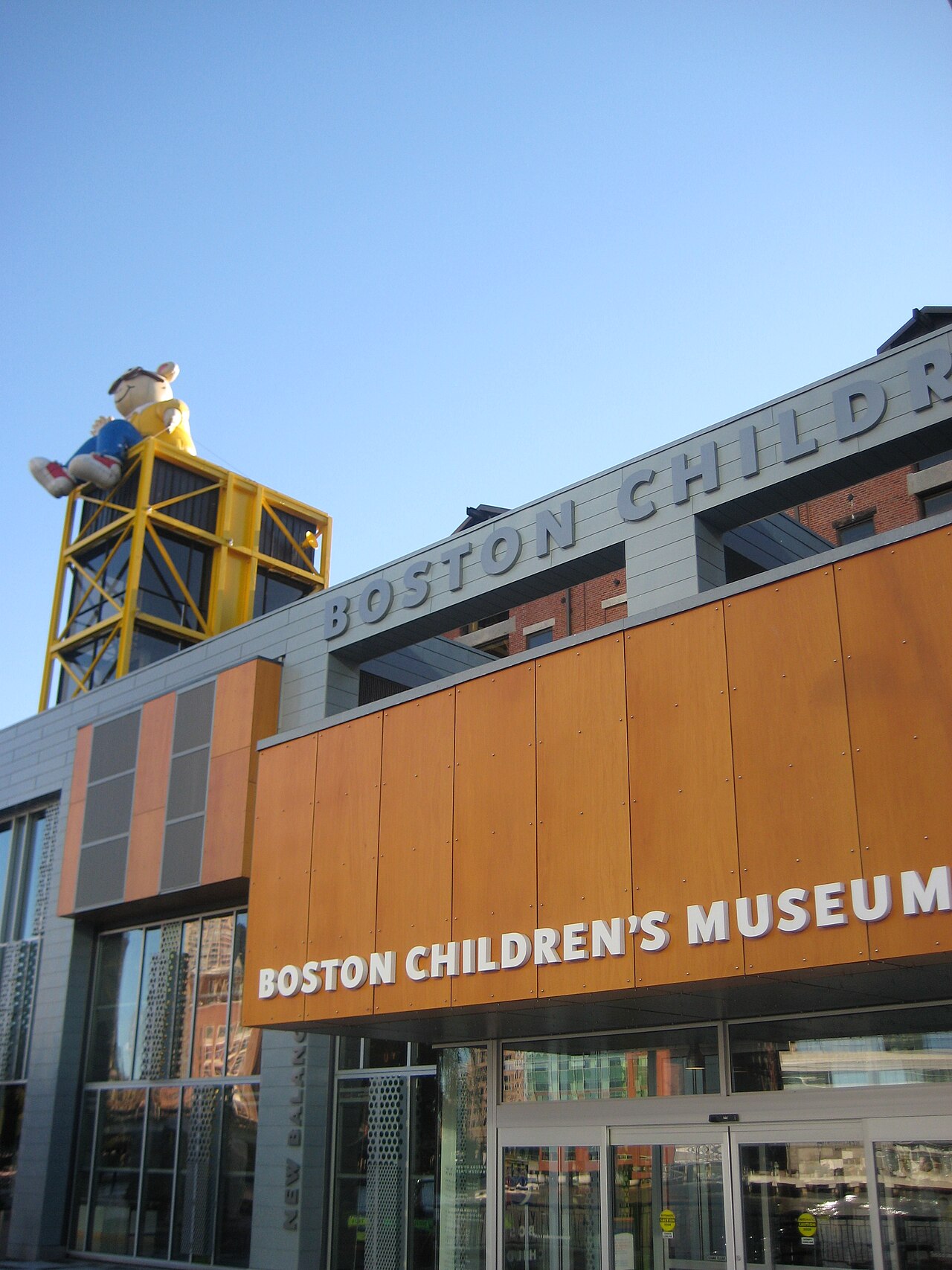
Boston Children's Museum
Hands-on play on the waterfront
⏱ 2 to 3 hours👤 All ages$$
Get Tickets
Get Children's Museum Tickets
Skip the line · mobile tickets accepted at the door
The museum's exhibits are designed to be touched, climbed, and explored. A tall, multi-level climbing structure sits at the center of the building and gives children a real physical challenge, while other galleries focus on water play, construction, art, and science. A standout is a traditional Japanese house, brought to the museum from Kyoto through a sister-city relationship, where children can learn about customs and everyday life. There are quieter spaces for the youngest visitors and areas where older kids can tinker.
A visit works best when you let children lead and follow their interests rather than trying to see everything. Younger children usually head straight for the climbing structure and the water, while older kids drift toward building and science stations. The building also houses a gift shop and a cafe area, and the outdoor plaza on the channel offers a place to stretch and watch the boats. The location is a short walk from South Station and the Seaport, so you can pair a visit with the harbor walk.
Plan around the busy times. Mornings are usually calmer, and weekends, school holidays, and rainy days bring crowds. Check the museum's website for current hours, ticketing rules, and any discounted evenings, since policies change. Dress children in clothes that can handle the water exhibits, bring a change of shirt for toddlers, and keep an eye on the more active climbing areas. Adults usually enter with the children and can rest on the benches and floor seating that are scattered through the galleries.
Remember that the best visits are the unhurried ones. Pack snacks and water if the policy allows, plan a lunch break away from the galleries, and leave when energy flags rather than pushing for one more exhibit. Strollers are common, so expect crowded elevators at peak times, and consider arriving shortly before opening to claim the best spots on the climbing structure.
What to Expect
Format
A self-guided, hands-on children's museum with climbing, water play, building, and a Japanese house.
Best Time
Weekday mornings are calmest. Weekends and rainy days are crowded.
Duration
Two to three hours for most families.
Tips
Check current hours and ticketing rules on the museum's website, bring a change of clothes for water play, and pair the visit with a walk along the channel.
⚡ Quick Picks
Best For
Families with toddlers and children up to elementary school age.
Families
Designed for children, with exhibits at every age level.
Couples
Not a couples destination, though it can suit multigenerational outings.
Pair With
The Seaport waterfront and the New England Aquarium are a short ride away.
Time Needed
Two to three hours.
Ready to book Children's Museum?
Get Tickets →Frequently Asked Questions
Where is the Boston Children's Museum?
On the Fort Point Channel near the Seaport and South Station, marked by the giant milk bottle.
What ages is it for?
It is best for toddlers through elementary school age, with some content for older children.
Is it a good rainy-day option?
Yes, it is fully indoors, though rainy days can be crowded.
Do I need tickets in advance?
Check the museum’s website for current ticketing rules and any discounted times.
How do I get there?
By the T to South Station on the Red Line, then a short walk across the bridge.
More Boston Attractions
Browse all →
New England Aquarium
On Central Wharf at the downtown waterfront — built around a four-story Giant Ocean Tank you spiral up and around, with sea turtles, sharks, rays, a beloved penguin colony, and harbor seals out front.
Museum of Science
The giant on the Charles — 700 interactive exhibits spanning a dam between Boston and Cambridge, the world's largest air-insulated Van de Graaff generator throwing indoor lightning, a planetarium, IMAX-scale theater, and the butterfly garden.

Boston Harbor Sightseeing Cruise
See Boston from the water — a narrated sightseeing cruise around the historic harbor, with skyline views, the waterfront, the Harbor Islands, and the maritime history that built the city.